What arrives?
Describe the product, component, pack format, dimensions, condition, quantity and number of variants.
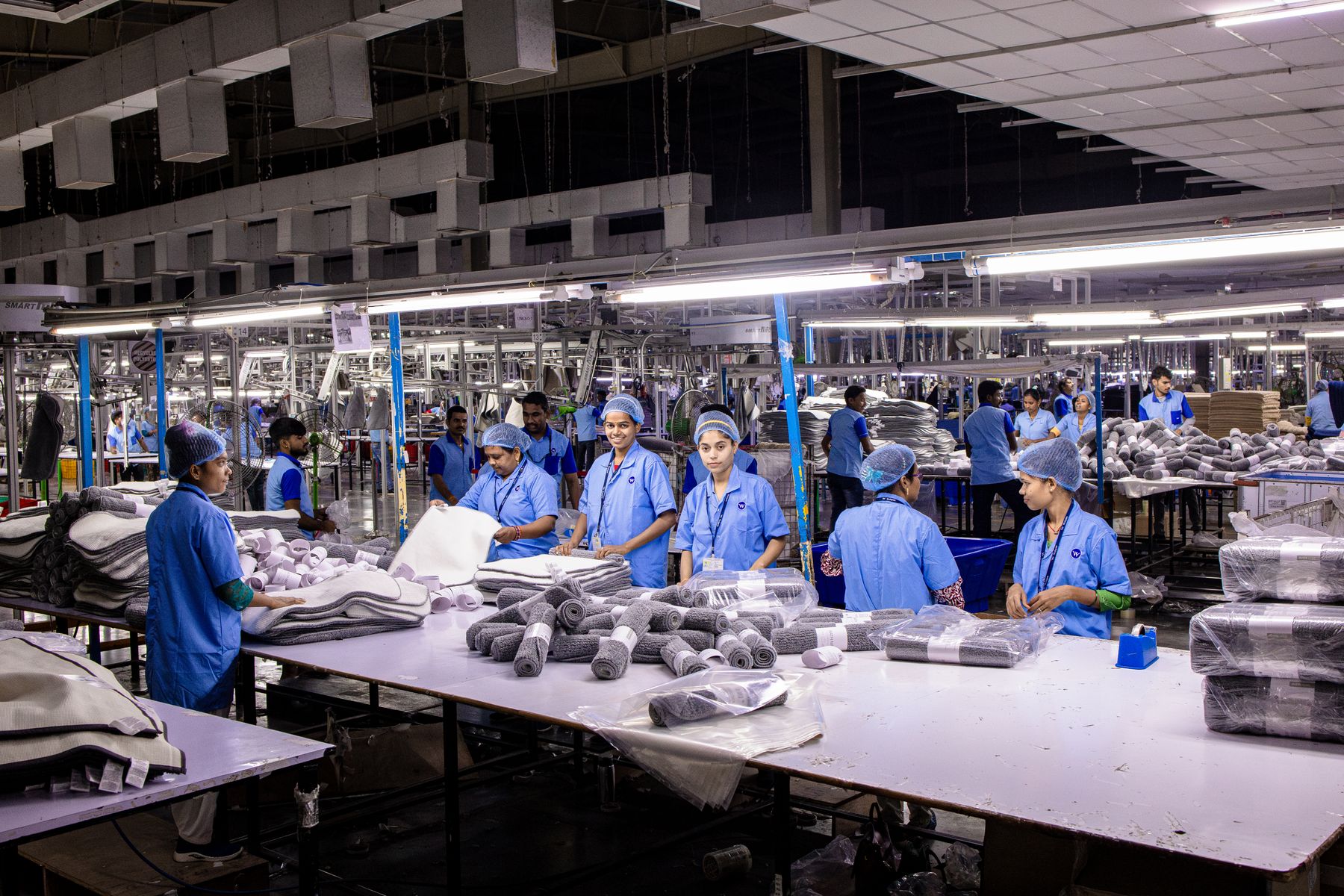
Contract packing explained
A plain-English guide to co-packing, repacking, hand packing, labelling and kitting—and when each route may help your business.
The short answer
A contract packer receives goods or components and completes an agreed pack build, assembly, labelling, repacking or finishing process for another business.
Co-packing is commonly used as another name for the same service. The customer and packer agree what arrives, what work is performed, what the finished result must be, how it is checked and where the goods go next.
A business may manufacture or import a good successfully but still need an external resource before it is retail-ready, campaign-ready or ready for its next supply-chain step. The pressure could come from volume, timing, a manual task, a pack change or stock that requires correction.
Outsourcing is most useful when the project is specific. “Pack our products” leaves too many unknowns. “Receive these labelled units, add one approved insert, place twelve into each outer case and complete 6,000 units by this date” is much closer to a reviewable brief.
Contract packing changes or builds the pack. Fulfilment usually stores finished stock, picks customer orders and dispatches parcels. Some companies provide both; others specialise. Ask what is included rather than assuming the two services are interchangeable.
Food, pharmaceutical, hazardous, temperature-sensitive, high-value and other specialist goods can require particular approvals or controls. Do not infer suitability from a generic service page. Disclose every relevant product and handling requirement during the first review.
Service comparison
The boundaries can overlap. Choose the closest description and explain the complete workflow.
| Service | What it means | A typical reason to enquire |
|---|---|---|
| Contract packing / co-packing | An external company completes an agreed packing stage or finished pack build. | A launch, seasonal peak, repeat run or temporary capacity requirement. |
| Hand packing | People complete detail-led packing, insertion, arrangement or assembly work. | The build has several components, variants or presentation requirements. |
| Repacking / rework | Existing stock is changed, corrected or moved into a different approved format. | Labels, packaging, configuration or presentation need correction. |
| Product labelling | Approved labels are applied to a defined product or pack position. | A new barcode, campaign, information or replacement label is required. |
| Kitting & assembly | Specified components are combined into one finished kit, set or pack. | Several items must arrive together in a controlled configuration. |
| Promotional packing | Goods and campaign materials are assembled for a fixed commercial activity. | A launch, sample, event, gift or seasonal pack has a critical date. |
A better buying brief
These answers help a contract packer assess fit, time and work content without repeated clarification.
Describe the product, component, pack format, dimensions, condition, quantity and number of variants.
List each packing, label, insert, assembly, removal, inspection or finishing action in order.
Supply approved artwork, photographs, placement guidance or a reference sample where appropriate.
Identify every approved packaging item, current stock status and responsibility for any material still required.
State stock availability, required completion, launch or delivery date and any fixed downstream dependency.
Define outer packing, identification, storage expectations and the next delivery or collection step.
The Stockholm Ltd viewpoint
A useful project review depends on the real goods and real work. Similar products can require different materials, controls and handling routes.
Contract packing FAQs
These answers describe the service generally. An actual project still needs a product and process review.
In most business searches, co-packing and contract packing describe the same general service: an external company performs agreed packing work for a brand, manufacturer or distributor.
Contract packing changes or builds the product pack. Fulfilment usually stores finished stock, picks customer orders and dispatches parcels. Some suppliers offer both, but they are different activities and should not be assumed to be included together.
Outsourcing can help when a deadline, temporary volume, manual process, campaign, pack change or stock correction would otherwise create an in-house bottleneck or require permanent overhead.
No. Fit depends on the product, required process, materials, volume, handling and regulatory needs, schedule and available operating route. Disclose specialist requirements in the first enquiry.
Ready to discuss the job?
Send the product, process, quantity, materials, finished standard and date for a practical initial review.